|
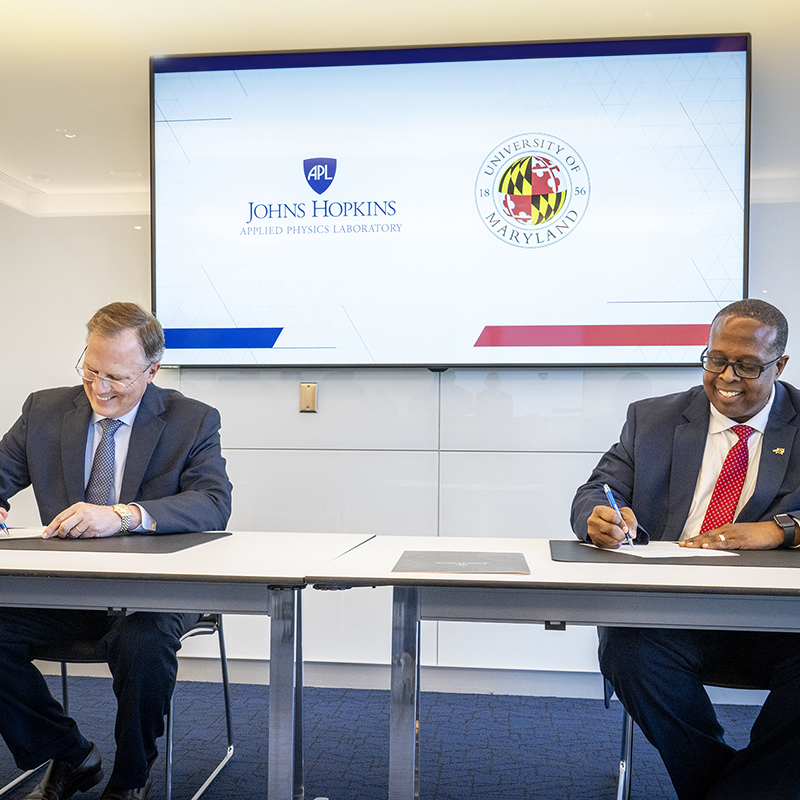
The Johns Hopkins Applied Physics Laboratory (APL) and the University of Maryland signed an agreement on Friday to partner on advanced research opportunities in space missions, as well as spacecraft instrument definition and design.
The memorandum of understanding will further collaboration between the two institutions, with a focus on research partnerships and the mentoring of graduate and undergraduate students in fields including autonomy, high-temperature materials and space systems technologies. This partnership will allow both organizations to develop innovations that will deliver enhanced solutions to the nation and address the workforce needs related to advancing these technologies.
"APL and the University of Maryland each provide critical expertise to NASA, the Department of Defense and the intelligence community,” said Bobby Braun, head of the Space Exploration Sector at APL.
“Deepening our research ties with the state’s flagship university is a natural way for APL to continue to exceed our sponsors’ expectations and drive our nation’s future in space.”
As a university-affiliated research center, APL fosters collaborative research and development efforts with universities that have made major commitments to strong educational and research programs in space, heliospheric and lunar sciences and national defense. The University of Maryland has over $500 million in annual research expenditures and a is top producer of science and engineering graduates nationally.
“These are the types of partnerships we need to make progress on the grand challenges of our time,” said UMD President Darryll J. Pines. “Both Johns Hopkins and the University of Maryland are world-class institutions with world-class facilities and world-class researchers. By joining together on research and technology, we exponentially expand what we could accomplish on our own.”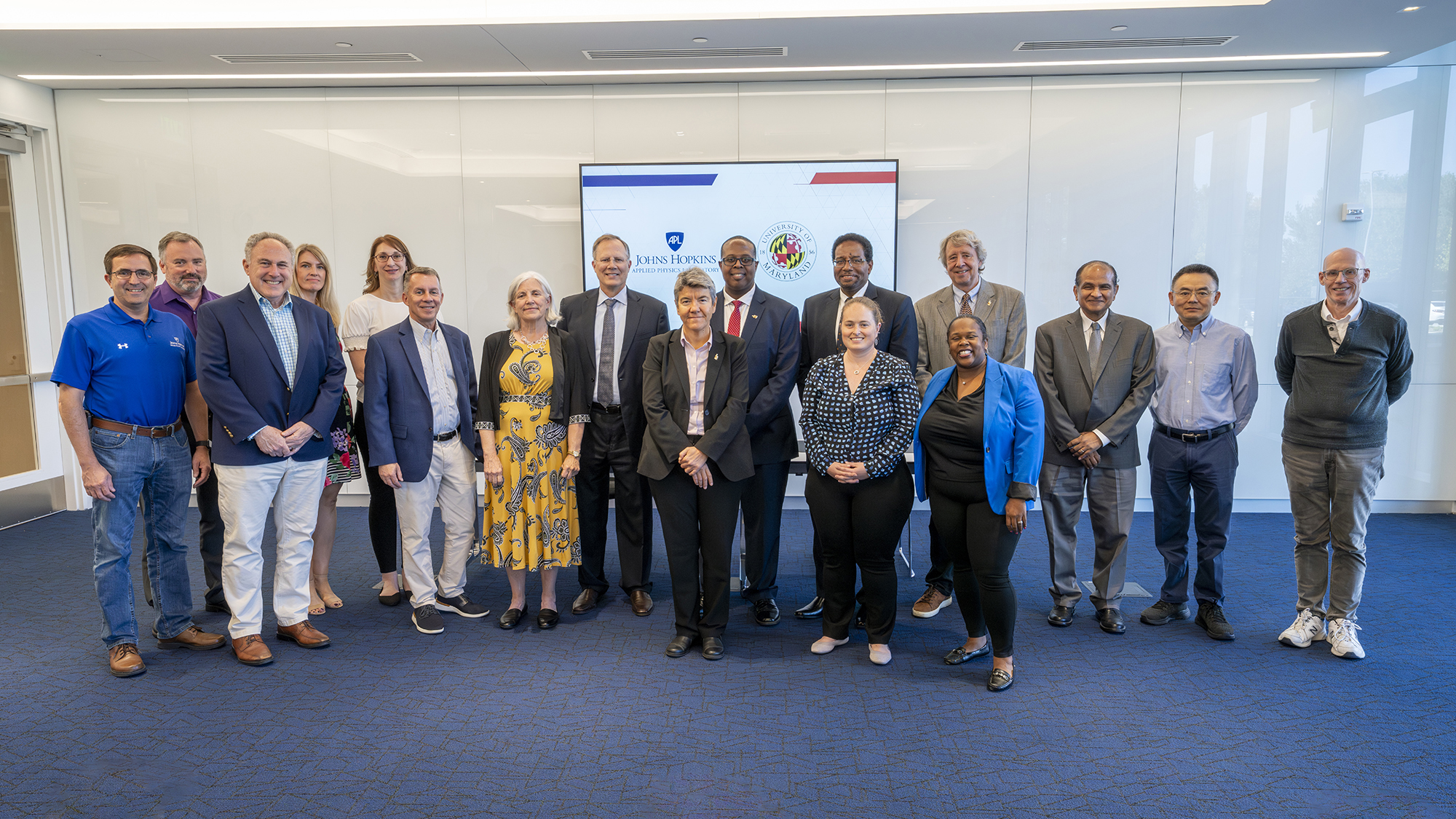
Through the MOU, APL and UMD personnel as well as undergraduate and graduate students and postdoctoral fellows will have increased opportunities for joint collaboration and to participate in research conducted at each other’s partner institutions.
“Accelerating the advancement of technologies related to space systems and exploration will yield new knowledge and solutions that positively impact life on earth,” said Samuel Graham, Jr., dean of UMD’s A. James Clark School of Engineering. “In collaboration with Johns Hopkins, our students and faculty will help us realize the cutting-edge solutions needed for safer, longer and more challenging missions, driving scientific discovery and strategic national interests.”
This article was adapted from a release from the Applied Physics Laboratory.
September 25, 2023
|